
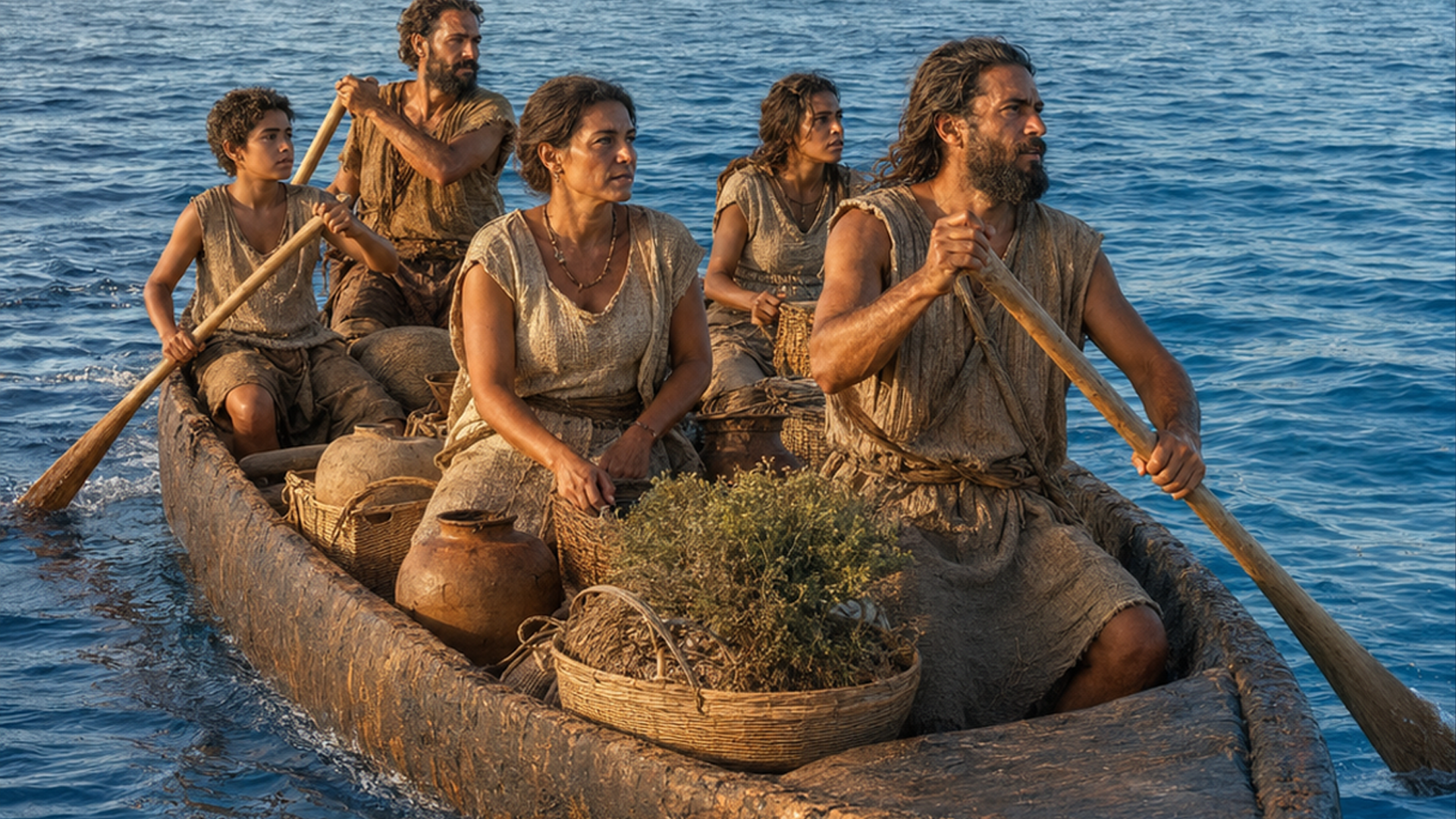
Malta’s earliest known communities may only have survived for generations because people repeatedly travelled across open sea.
A peer-reviewed study published in PNAS Nexus examined how hunter-gatherers could have maintained a presence on the Maltese Islands for approximately 1,000 years despite the limited land and resources available.
The researchers concluded that Malta was unlikely to have supported a sufficiently large and isolated population over the entire period. Repeated long-distance crossings—probably maintaining connections with Sicily—would therefore have been necessary.
People Reached Malta Before Farming
Evidence from the Latnija site in the Mellieħa area indicates that hunter-gatherers occupied Malta from around 8,500 until 7,500 years ago.
That finding changed the previous understanding that the islands were first inhabited by farming communities.
The archaeological material includes stone tools, hearths and evidence that people made use of land animals, birds and marine resources. The journey from Sicily would have involved a sea crossing of around 100 kilometres under geographical conditions broadly similar to those of the present day.
How Many People Could Malta Support?
The new study, led by James Blinkhorn and colleagues, used demographic and environmental modelling rather than discovering a new boat or travel record.
Researchers considered changing sea levels, the size of Malta and Sicily, vegetation productivity and information from more recent hunter-gatherer populations.

Their model estimated that Malta’s potential maximum population declined from around 419 people after separation from Sicily to approximately 170 people by 9,000 years ago.
The researchers considered this too small for long-term population viability in complete isolation.
What The Study Does and Does NotShow
The research supports the idea that Malta remained connected with other Mediterranean communities.
It does not establish precisely:
- How often voyages took place
- Whether travellers followed one regular route
- What vessels or navigation methods were used
- Whether people lived in Malta all year
- Whether every journey began in Sicily
Researchers suggest Malta may have been occupied seasonally or for longer periods, with new arrivals and continuing contact supporting the population.
A More Connected Ancient Mediterranean
The conclusion challenges the idea that small, distant islands were beyond the capabilities of European hunter-gatherers.
It presents Malta not as an isolated edge of the ancient world but as part of a network in which people, knowledge and possibly resources moved across significant stretches of sea.
The finding also adds cultural context to Latnija, where the physical evidence of Malta’s early inhabitants was uncovered.


