For many people in Malta, 8 September means a public holiday, festa celebrations and the traditional Regatta. Behind those traditions, however, lies more than four centuries of Maltese history.
Victory Day, known as Jum il-Vitorja, is unusual because it has come to commemorate three different victories associated with Malta, in 1565, 1800 and 1943.
Each belongs to a very different period, but together they have given 8 September a unique place on Malta’s calendar.
1565: The end of the Great Siege
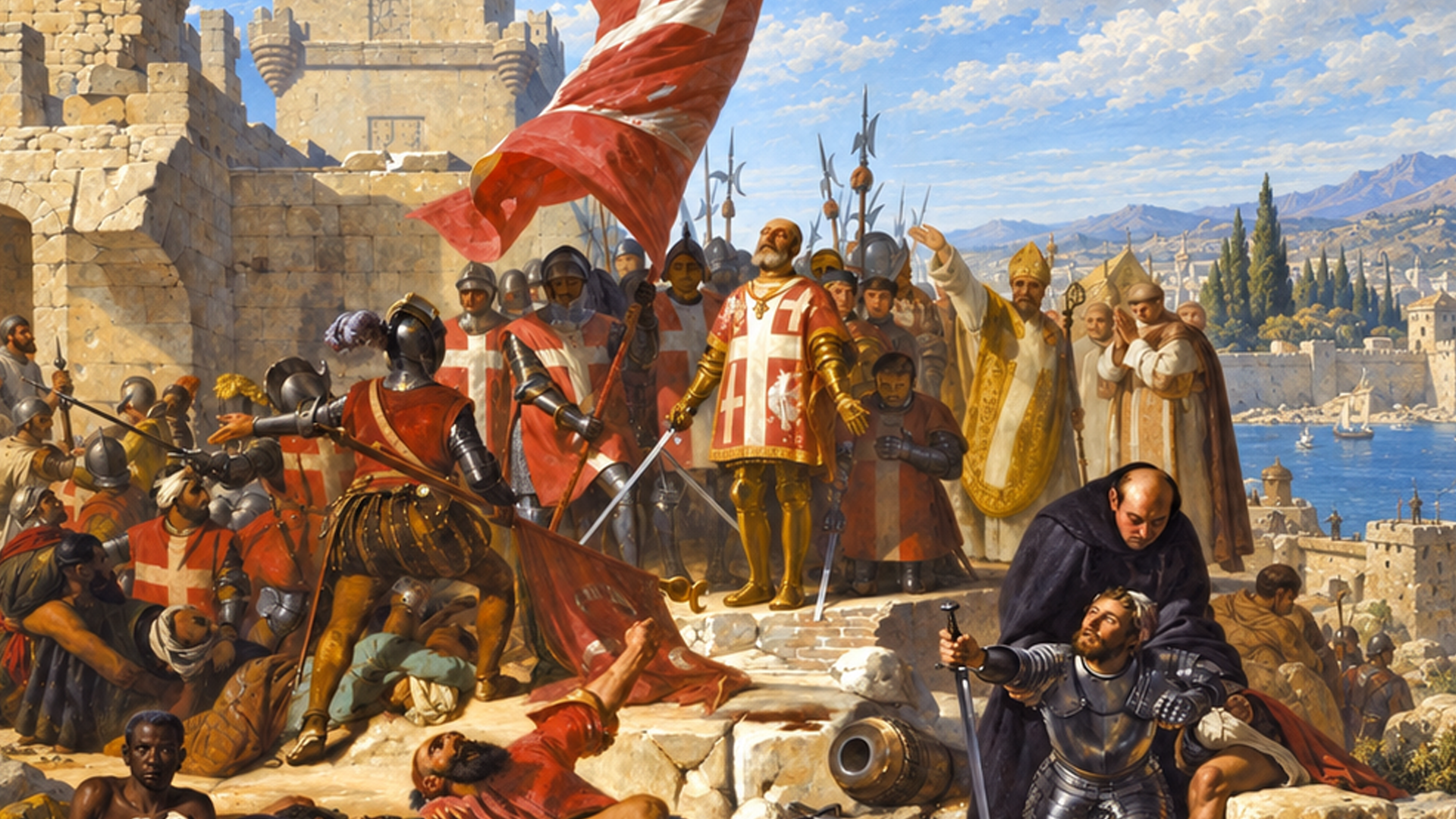
The earliest and perhaps best-known connection comes from the Great Siege of Malta in 1565.
Ottoman forces arrived in Malta in May and faced the Knights of St John and Maltese defenders in months of fierce fighting. Fort St Elmo, Birgu, Senglea and Fort St Angelo were among the places at the heart of the conflict.
By September, both sides had suffered heavy losses. A relief force arrived from Sicily and the Ottoman attempt to take Malta was defeated, with 8 September marking the victorious end of the Great Siege.
The events of 1565 would leave another major mark on Malta. Following the siege, the Order strengthened the islands’ defences and began building a new fortified city on the Sciberras Peninsula. That city became Valletta.
1800: The end of French occupation
The second victory associated with the date came more than two centuries later.
Napoleon Bonaparte took Malta in 1798 while travelling towards Egypt, ending the rule of the Order of St John.
Resistance to French rule soon developed among the Maltese population. French forces eventually found themselves largely confined behind the harbour fortifications as Maltese forces, supported by British and allied forces, maintained a blockade.
By September 1800, the French position was no longer sustainable and the garrison capitulated, bringing the occupation to an end and opening a new period of British control.
There is an important distinction in this part of the Victory Day story. The French capitulation was concluded in early September rather than on 8 September itself. The end of French rule nevertheless became incorporated into the wider national commemoration associated with the date.
1943: Italy’s armistice is announced
More than a century later, 8 September became associated with another major turning point.
Malta had endured years of bombing, destruction and hardship during the Second World War, with its strategic position in the Mediterranean placing the islands on the front line.
Italy signed an armistice with the Allies on 3 September 1943. The agreement was publicly announced on 8 September.
For Malta, which had endured years of attacks from Axis forces, the announcement gave the date another powerful association with the end of conflict. Italian warships subsequently arrived in Maltese waters under the terms of the armistice.
Three victories connected by one date
That leaves Malta with three historic victories commemorated through Victory Day: the end of the Great Siege in 1565, the end of French occupation in 1800 and the announcement of Italy’s armistice in 1943.
They involved different conflicts, different powers and hundreds of years of history, yet all became connected with 8 September.
Why Il-Bambina is celebrated on the same day
There is also a religious tradition behind the date. The Catholic calendar marks the Nativity of the Blessed Virgin Mary on 8 September, a feast known locally as Il-Bambina.
In Malta and Gozo, the feast is particularly associated with Mellieħa, Naxxar, Senglea and Xagħra.
Together with the traditional Grand Harbour Regatta and official national commemorations, these festas mean Victory Day brings history, faith, sport and community traditions together on a single day.
What might simply feel like a welcome public holiday therefore carries a much bigger story, with more than four centuries of Maltese history connected to 8 September.