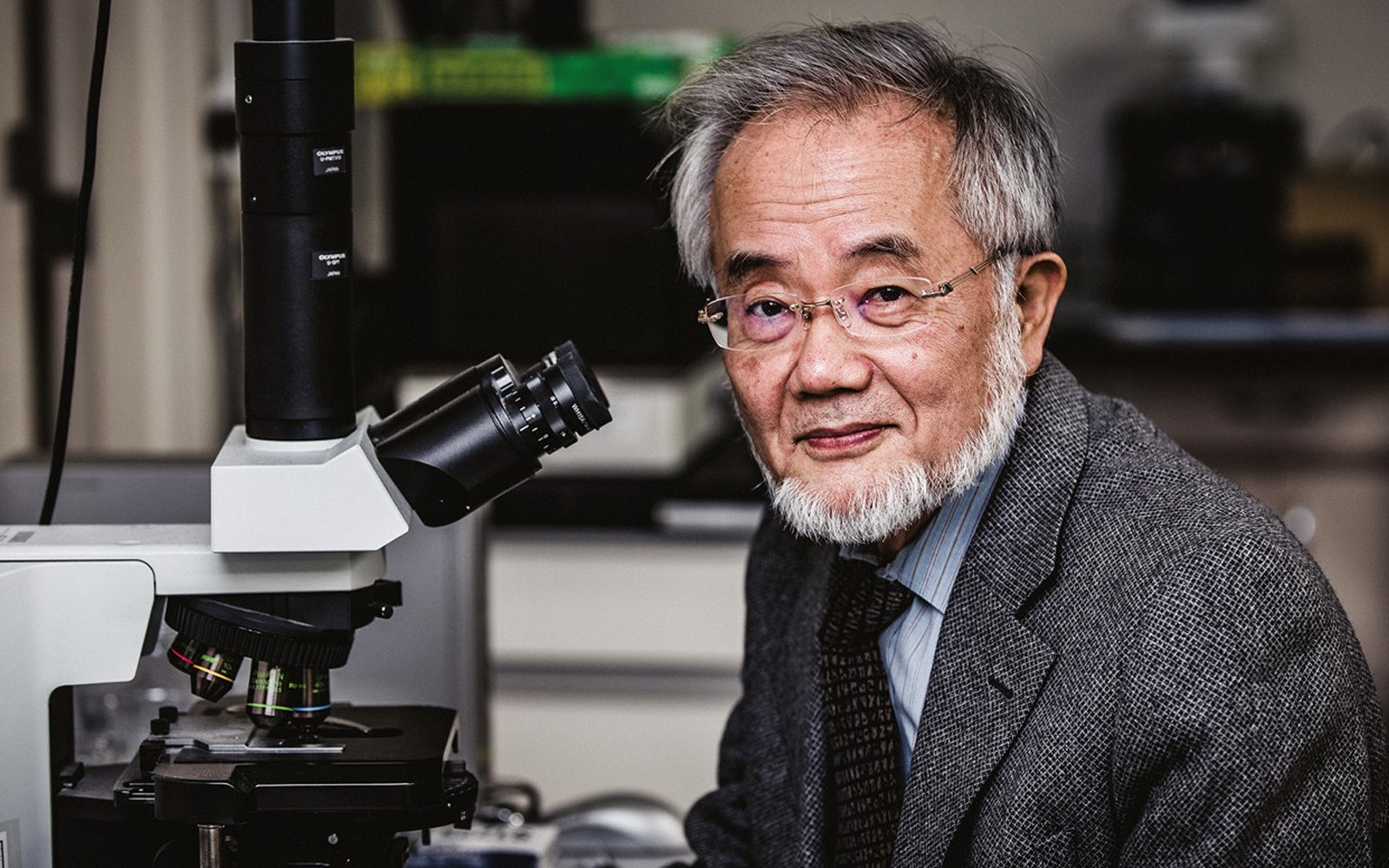

Japanese scientist Yoshinori Ohsumi won the 2016 Nobel Prize in Physiology or Medicine for discoveries that helped scientists understand autophagy, a natural process often described as the body’s cellular recycling system.
Autophagy comes from words meaning “self-eating”, but in simple terms it is the way cells break down and reuse parts of themselves. This can include damaged components, old proteins, or structures that are no longer needed. The recycled material can then be used again by the cell.
Ohsumi’s work was important because, although autophagy had been observed decades earlier, scientists did not fully understand how it worked. His research in the 1990s, using baker’s yeast, helped identify genes that are essential for the process. The Nobel Prize organisation says his discoveries transformed the understanding of autophagy and its importance in human physiology and disease.
Autophagy is now studied in connection with ageing, infection, cell stress and several diseases. It is not a magic cure or a simple health hack, but a basic biological process that helps cells maintain balance and respond to changing conditions.
The topic has also become popular online because of its link with fasting. When the body has less immediate energy available, cells may activate certain recycling and repair pathways. However, claims that autophagy “starts exactly after 24 hours” or “peaks after 48 hours” should be treated carefully.

Human research is still developing. A 2024 study protocol published in Nutrients noted that while prolonged fasting has attracted interest, its favourable effects and possible risks in humans still need to be better understood. The same paper also highlighted that more research is needed to clarify the fasting duration required to trigger autophagy in people.
This means the Pubity post is right to connect Ohsumi with autophagy, but the fasting part should be explained with caution. Autophagy is real, and fasting may influence it, but the exact timing can vary depending on the person, their health, activity level and other biological factors.
In 2024, Ohsumi also made headlines for another reason. Tokyo Tech announced that he donated his Nobel Prize medal to the university, with the hope that it would inspire young researchers, middle school students and high school students to appreciate basic research and the joy of science.
It is a fitting gesture from a scientist whose work showed how much can be discovered by asking deep questions about tiny processes happening inside living cells.