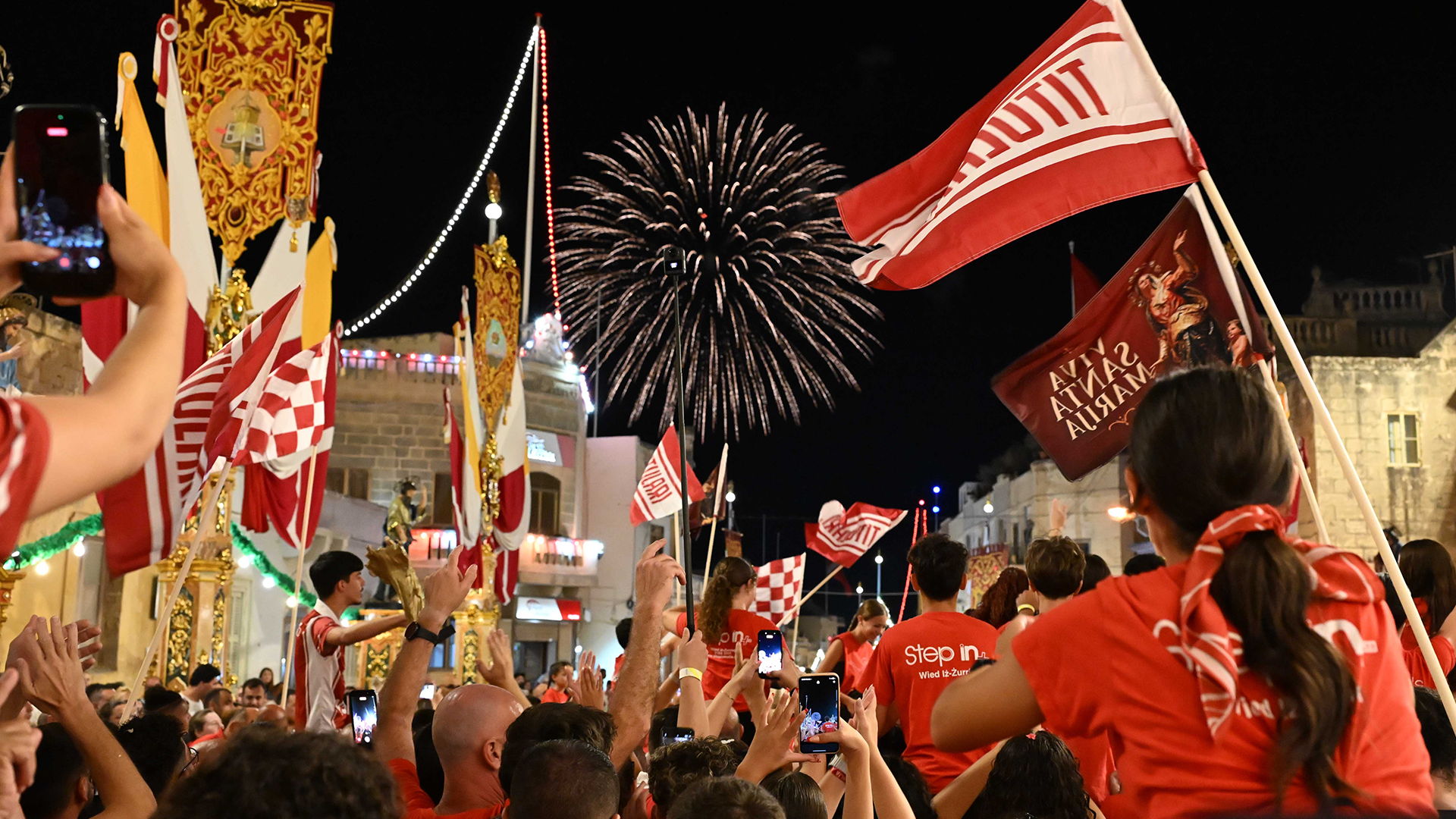


Mqabba Marks 190 Years Since Santa Marija’s Historic Arrival
Mqabba is commemorating the 190th anniversary of the arrival of its titular statue of Santa Marija, which reached the village on the eve of the feast on 14 August 1836.
The wooden statue was created by Mastru Xandru Farrugia of Żejtun and brought to Mqabba during a solemn pilgrimage accompanied by residents and devotees.
Its arrival became a major moment in the village’s religious and cultural history, marked by church bells, petards, triumphal arches, sacred music and fireworks.
Centuries Of Devotion To Santa Marija
Mqabba’s devotion to the Blessed Virgin Mary stretches back to before the locality became an independent parish.
The village originally formed part of the Parish of Bir Miftuħ near Gudja, which is also dedicated to Saint Mary.

Mqabba became a separate parish in 1598 following years of requests from the local community. The Assumption of the Blessed Virgin Mary was then chosen as the parish’s titular feast.
By the beginning of the 19th century, a statue of the Assumption already existed. However, growing devotion within the parish led to the commissioning of a new titular statue.
Mastru Xandru Farrugia Creates The New Statue
The work was entrusted to Mastru Xandru Farrugia, a sculptor from Żejtun.
The agreement valued the wooden statue at 250 skud. The timber required for its construction was purchased from the Government Dockyard for a further 40 skud.
Once completed, the statue remained in Żejtun until the day of its ceremonial journey to Mqabba.
The Journey From Żejtun To Mqabba
On the afternoon of Sunday, 14 August 1836, residents of Mqabba and other devotees gathered in Żejtun to accompany the statue to its new home.
The procession first passed through Ħal Għaxaq, where it was welcomed by the parish priest, local residents and the sound of church bells.
The journey then continued through Gudja, where another welcome awaited the statue with bells and petards.
By the time the procession approached Mqabba, dusk was beginning to fall.
Three Arches Welcome Santa Marija
The people of Mqabba erected three triumphal arches to celebrate the statue’s arrival.
The first stood at the village entrance and was inspired by the triumphal arches of Ancient Rome.
A second arch was built at the entrance to the village square, while the third stood on the parvis in front of the Parish Church.
The statue paused beneath each arch as it made its way through the village.
Following the singing of the first motet, soldiers fired a military salute before the procession continued towards the church.
Celebrations Continue Inside The Parish Church
Once the statue entered the Parish Church, solemn liturgical celebrations began.
Sacred chant and music alternated during the ceremony, while the soldiers involved in the procession took their place in the presbytery.
The celebrations concluded with the Blessed Sacrament and a fireworks display.
The statue would go on to become one of the central artistic and religious symbols of Mqabba.
Another Anniversary For The Festa Tradition
The anniversary year also marks fifty years since the Brothers of the Confraternity of the Blessed Sacrament began carrying the titular statue during the feast procession while wearing the red mozzetta.
Future commemorations will also recognise the anniversaries of the statue’s silver pedestal and its bradella, the platform on which it is carried.
Together, these elements form part of the artistic heritage surrounding Mqabba’s titular statue and its feast.
After 190 years, Santa Marija remains closely connected to the faith, history and identity of generations of Mqabba residents.