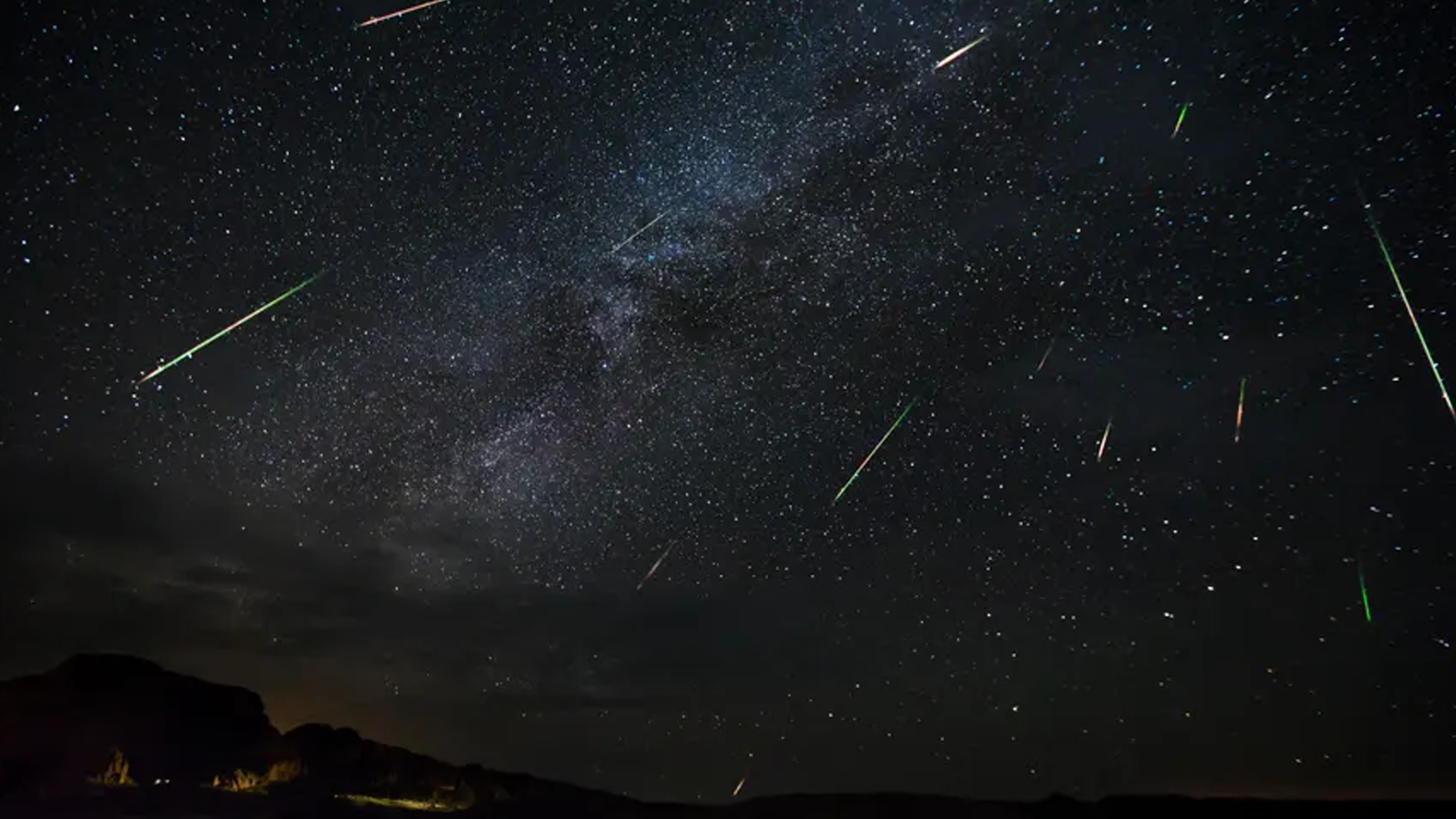

One of August’s biggest night-sky events arrives this week, with the Perseid meteor shower reaching maximum activity around 12–13 August.
And 2026 comes with particularly favourable lunar conditions.
The American Meteor Society says the Moon will be new on 12 August and effectively 0% illuminated on the peak night, removing one of the biggest obstacles to seeing fainter meteors.
For anyone in Malta willing to stay up late and escape some of the islands’ artificial light, that creates a good opportunity to watch.
Could You Really See 100 Meteors An Hour?
Possibly under theoretical ideal conditions — but don’t treat 100 as a promise.
The American Meteor Society gives this year’s Perseids a Zenithal Hourly Rate, or ZHR, of 100. That is a standardised measure assuming ideal observing conditions rather than a prediction that every observer will actually count 100 meteors in 60 minutes.

The Society says normal hourly rates from rural locations are around 30–50 Perseid meteors at maximum.
What you actually see in Malta will depend on factors including cloud cover, artificial light, how dark your location is and where the shower’s radiant is positioned in the sky.
So while “100 shooting stars per hour” makes a great headline, dozens per hour from a genuinely dark location is a more realistic expectation.
When Should You Watch From Malta?
The key night to circle is Wednesday 12 August into Thursday 13 August. The American Meteor Society lists 12–13 August as the shower’s 2026 peak night.
EarthSky gives the predicted maximum at 14:53 UTC on 13 August. That exact moment falls during daylight in Malta, but the shower remains active around the maximum, making the preceding night and especially the pre-dawn hours of 13 August a practical local viewing opportunity.
The Perseid radiant rises during the night and is highest towards dawn, so patience can pay off if you stay out later.
How To Give Yourself A Better Chance
You do not need a telescope or binoculars to watch a meteor shower.
Instead, choose the darkest safe location you can find, away from streetlights and other strong artificial lighting. Give your eyes time to become accustomed to the darkness and try to keep as much of the sky within your field of view as possible.
Although the shower appears to radiate from the direction of the constellation Perseus, meteors can streak across different parts of the sky. The shower takes its name from that radiant.
Cloud conditions will ultimately decide how much Malta can see, so it is worth checking the latest local forecast before heading out.
What Exactly Are The Perseids?
Despite the familiar phrase “shooting stars”, the streaks are not stars.
The Perseids occur as particles associated with comet 109P/Swift-Tuttle enter Earth’s atmosphere at high speed. The American Meteor Society lists the shower’s meteors at around 59 kilometres per second.
The shower is active from 17 July until 24 August, but maximum activity is concentrated around its August peak.
With a new moon removing lunar glare this year, the night of 12–13 August is the one to remember.
Just don’t count on exactly 100. Find somewhere dark, give your eyes time and see what the Maltese night sky delivers.