
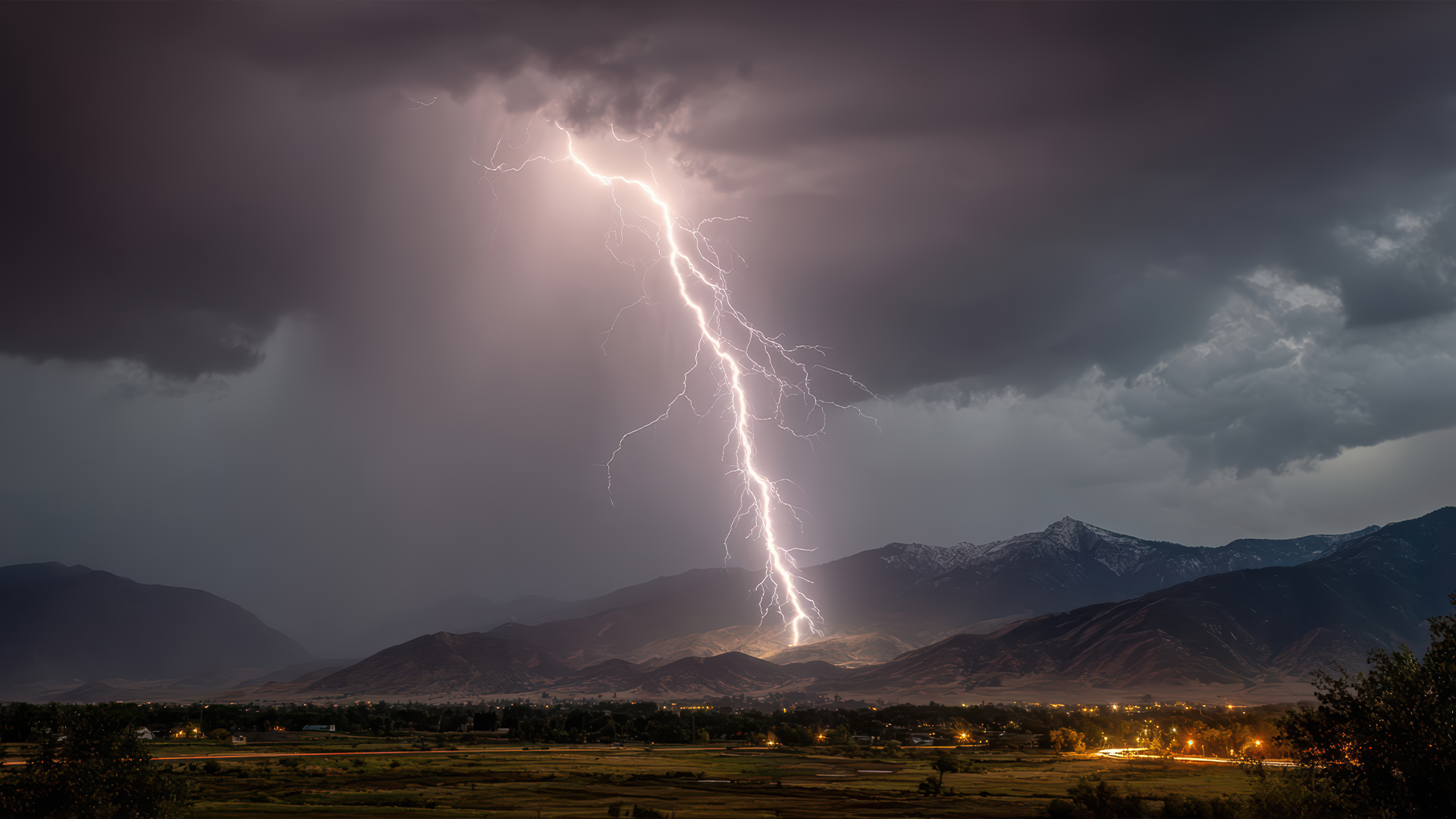
Dark clouds build on the horizon, the wind suddenly picks up and before long a flash of lightning is followed by a rumble of thunder. But what actually has to happen in the atmosphere for a thunderstorm to form?
Despite how complicated a storm can become, the basic recipe is surprisingly simple. According to the US National Oceanic and Atmospheric Administration, thunderstorms require three main ingredients: moisture, unstable air and lift.
1. Warm, moist air starts rising
A thunderstorm begins when warm, moisture-rich air is lifted upwards. Heating of the ground can provide this lift, but air can also be forced upwards by weather fronts or terrain. For a storm to keep developing, the atmosphere needs to be unstable, allowing the rising air to continue climbing.
As this air rises into lower atmospheric pressure, it expands and cools. Once it cools sufficiently, water vapour condenses and cloud begins to form.
2. A small cloud can grow into a giant
What begins as a cumulus cloud can continue growing vertically when conditions provide enough moisture and instability.
Eventually it can develop into a cumulonimbus cloud, the enormous thundercloud often recognised by its dark base and towering shape. Mature cumulonimbus clouds can develop an anvil-shaped top as they reach high into the atmosphere.
These clouds can produce much more than ordinary rain. Heavy downpours, hail, strong wind gusts, thunder and lightning can all be associated with them.
3. Powerful currents develop inside the storm
Inside the growing cloud, strong updraughts carry water droplets and ice particles upwards.
Once precipitation starts falling, downward-moving air also develops. The storm has now reached its mature stage, with an updraught continuing to feed it while rain and cooler air descend through other parts of the cloud.
This is generally when a thunderstorm is at its most active, with heavy rain, frequent lightning, hail and strong winds all possible.
4. So where does lightning come from?
High inside a thundercloud, water droplets, ice crystals and hail-like particles are constantly moving and colliding.
These interactions help separate electrical charges within the cloud. Smaller positively charged ice particles can be carried towards the top by strong updraughts, while larger negatively charged particles tend to remain lower down or fall.
As the electrical imbalance becomes sufficiently large, the insulating properties of the air break down and an electrical discharge occurs. That is the flash we see as lightning.
Lightning does not necessarily travel from a cloud to the ground. Electrical discharges can also occur within a cloud or between clouds.
5. Lightning creates the thunder
Thunder and lightning are not two separate events. The lightning actually produces the thunder.
A lightning discharge heats the surrounding air extremely rapidly. The narrow channel of air can reach temperatures of up to around 30,000°C. The sudden heating causes the air to expand rapidly, producing a shockwave that we hear as thunder.
We see the flash before hearing the thunder simply because light reaches us much faster than sound.
What makes a thunderstorm eventually disappear?
A storm begins weakening when its downdraught becomes dominant and cuts off the warm, moist air that has been feeding it.
Once that supply is disrupted, rainfall gradually decreases and the thunderstorm enters its dissipating stage. Lightning can remain a danger even while the storm appears to be weakening.
A single cumulonimbus cloud can have a relatively short life, while larger storm systems can continue when multiple thunderstorm cells develop in succession or clusters.