A mysterious boat-shaped formation in eastern Türkiye is once again attracting attention as researchers investigate whether the site could have any connection to Noah’s Ark.
For anyone fascinated by biblical history, the possibility is extraordinary. But despite renewed research into the site, there is currently no scientific confirmation that the remains of Noah’s Ark have been discovered.
What is the Durupınar formation?
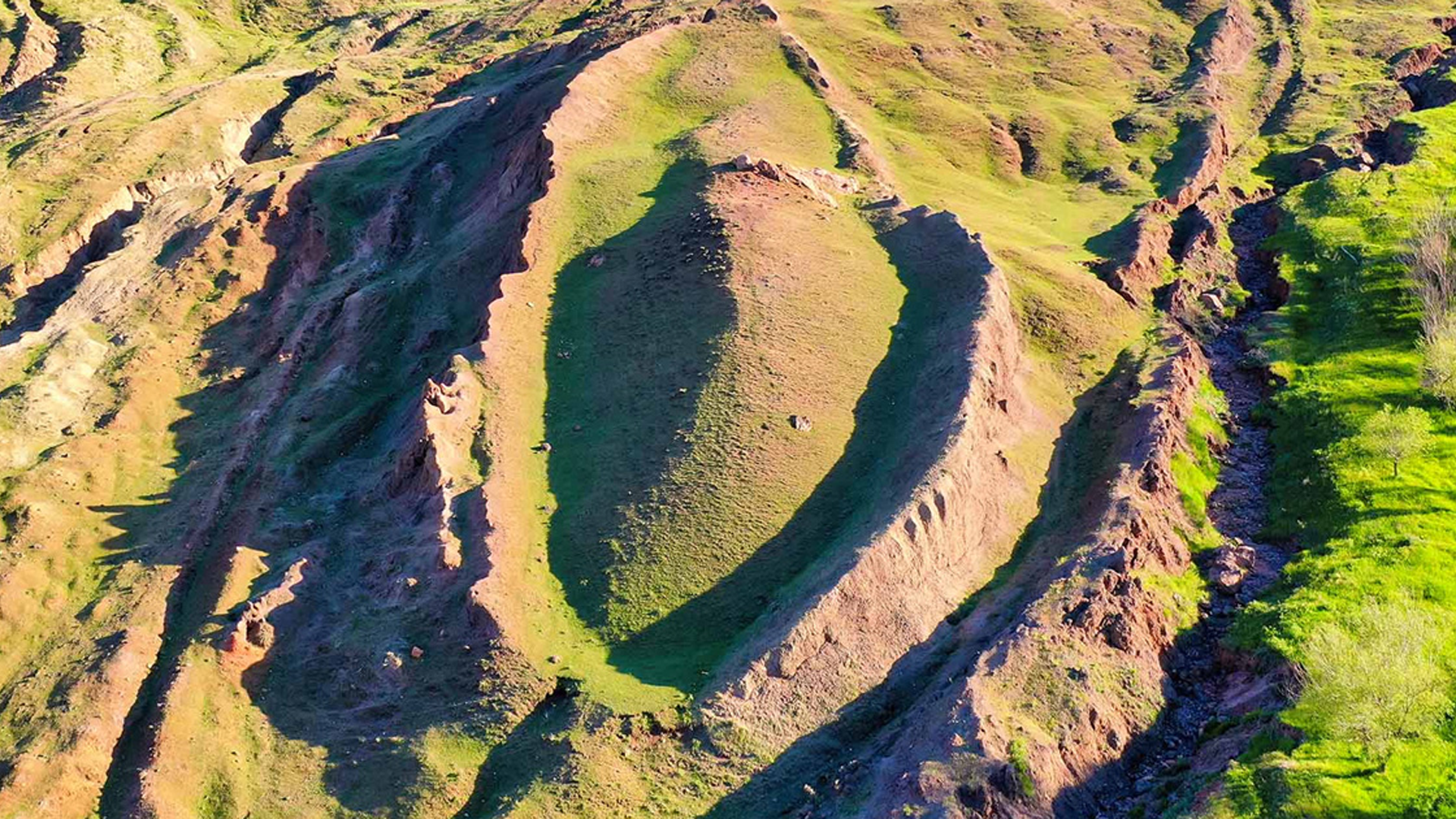
The investigation centres on the Durupınar formation, near Doğubayazıt in Ağrı province, within the wider Mount Ararat region traditionally associated with the biblical story of Noah.
The distinctive formation was identified in aerial photographs in 1959 and has attracted researchers, pilgrims and Ark hunters for decades because its outline resembles the shape of a large boat.
A new research project launched in 2026 is being led by Professor Cenker Atila of Sivas Cumhuriyet University. The university has confirmed that the project is examining the site using archaeological and geological methods.
Researchers are looking beneath the surface
Researchers associated with the investigation have pointed to underground features detected during earlier surveys, as well as differences found in soil samples from the formation.
These observations have prompted further investigation into what lies beneath the surface, but they should not be treated as evidence that a buried vessel has been identified.
The current work is expected to include mapping, underground imaging and analysis of the formation’s geological composition.
There is also a geological explanation
The idea that Durupınar could be Noah’s Ark has faced substantial scientific criticism.
In a 1996 study, geologist Lorence Gene Collins and David Fasold concluded that the site was a natural geological formation rather than the remains of a ship. Their analysis found that material previously interpreted as an iron bracket consisted of weathered minerals, while material described as fossilised wood was rock.
The researchers also attributed apparent structural features at the site to naturally occurring mineral concentrations within folded rock layers.
Fasold is particularly notable because he had previously been one of the people promoting the Durupınar site as a possible location of the Ark before later co-authoring the geological study rejecting that interpretation.
Has Noah’s Ark been found?
Not on the evidence currently available.
The Durupınar formation remains an intriguing site under investigation, and the new research could reveal more about how it formed and what lies beneath it.
For now, however, claims that researchers have discovered Noah’s Ark go further than the evidence supports. The connection between this unusual formation and the biblical vessel remains unproven.